The Raw Deal: How Niche Creators Engineer the Illusion of Unfiltered Honesty
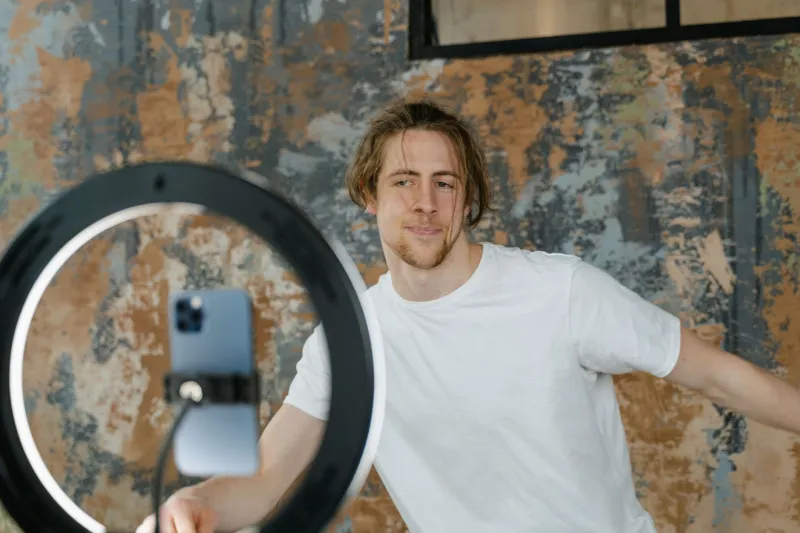
There's a specific kind of video you've probably watched more times than you'd like to admit. No intro music. Shaky handheld camera. The creator looks tired, maybe a little emotional, definitely not wearing anything they'd post on Instagram. They say something like, "I wasn't even going to post this, but I think you guys need to hear it." And you feel it — that electric sense that you're watching something real, something the algorithm didn't manufacture.
Except here's the thing: you might be watching one of the most carefully constructed pieces of content that creator has ever made.
Welcome to the authenticity trap — the place where genuine self-expression and calculated brand strategy blur into something that's nearly impossible to tell apart, even for the people doing it.
The Underground Has Always Had a Uniform
Let's be honest about something. Every subculture has a dress code for realness. Punk had its ripped denim. Indie film had its shaky handheld cinematography. True crime podcasters have their "I'm just a person who got obsessed with this" disclaimers. The visual and verbal language of not trying is, paradoxically, one of the most tried things in the creative economy.
Niche digital creators didn't invent this. But they've refined it into something almost scientific.
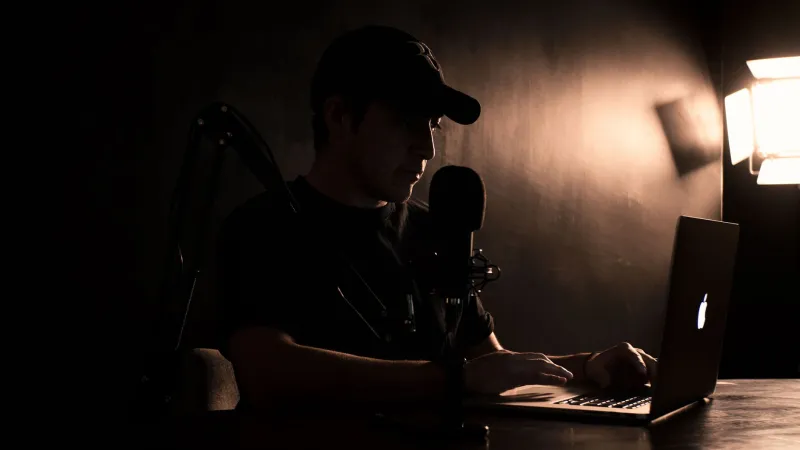
Think about the micro-podcasters who record in closets surrounded by moving blankets — not because they can't afford a better setup, but because the acoustic imperfection signals intimacy. Or the BookTok creators who film their shelves slightly out of focus, dog-eared paperbacks stacked haphazardly, because a too-organized bookshelf reads as performative. The chaos is the branding.
None of this is inherently dishonest. But it's not not deliberate, either.
The Vulnerability Industrial Complex
Somewhere around 2019, the internet collectively decided that vulnerability was the highest form of creative currency. Mental health check-ins, candid breakdowns, "I almost quit" videos — these became the content equivalent of a blue-chip stock. Audiences rewarded emotional exposure with engagement, loyalty, and the kind of parasocial attachment that no amount of polished production could buy.
Niche creators, who were already operating in spaces where intimacy was the whole point, figured this out fast.
The formula isn't hard to reverse-engineer once you see it. Post something highly produced and edited? Comments stay surface level. Drop something that looks unplanned, emotionally raw, maybe a little chaotic? The comment section turns into a group therapy session. People aren't just watching — they're showing up. And for a creator whose entire value proposition is community, that's the whole ballgame.
So creators started optimizing for the feeling of spontaneity the same way mainstream YouTubers optimize for watch time. They learned which emotional beats land. They figured out that a slight voice crack at the right moment is worth more than a perfectly scripted monologue. Some of them will tell you this openly, if you catch them in the right interview.
Does Calculated Rawness Cancel Out Real Rawness?
Here's where it gets genuinely complicated, and where a lot of hot takes about this subject go wrong.
Just because a creator has learned that vulnerability performs well doesn't mean the vulnerability is fake. Human beings are capable of strategically deploying real emotions. A creator can be actually struggling with burnout and also know that posting about it on a Tuesday afternoon will hit different than posting on a Friday. Both things are true simultaneously.
The more interesting question is what happens over time. When you've trained yourself to recognize which of your authentic moments are "postable," does that start to change how you experience those moments in the first place? Several creators — mostly in the podcast and long-form YouTube space — have talked about this weird feedback loop where they'll be going through something genuinely hard and find themselves mentally framing it as content before they've even processed it themselves.
That's not manipulation. That's just what happens when your emotional life and your professional life share the same address.
The Outsider Status Hustle
For niche creators specifically, there's an added layer to all of this: the performance of remaining underground.
Maintaining outsider status is a full-time job. It means carefully managing how much mainstream exposure you acknowledge. It means occasionally turning down opportunities that would be visible to the wrong audience. It means posting about your small numbers like they're a badge of honor rather than a business problem. "I'd rather have 8,000 listeners who actually care than 800,000 who don't" is something you've heard approximately 400 times, and while it's often genuinely felt, it's also doing enormous brand work every single time it's said.
The creators who are best at this — the ones with the most devoted niche followings — have essentially built a mythology around their own smallness. They are the keepers of something the mainstream doesn't understand and doesn't deserve. Their audience isn't just fans; they're an in-group. And the "realness" of the creator is the membership card.
Disrupting that mythology, even slightly, carries real risk. Which is why when niche creators do blow up — or take a brand deal, or get covered by a mainstream outlet — the backlash often feels wildly disproportionate to the actual offense. The audience isn't just annoyed. They feel like the contract has been broken. Because in a way, it has.
So What Are You Actually Watching?
None of this means you should stop enjoying your favorite underground creator, or that the connection you feel is somehow fraudulent. But it might be worth sitting with the idea that "authentic" and "strategic" aren't opposites — they're collaborators.
The best niche creators aren't lying to you. They're just very, very good at presenting the version of themselves that their audience needs them to be. That takes skill. It takes self-awareness. And honestly, in a media landscape drowning in corporate polish and algorithmically optimized content, there's something almost admirable about the whole enterprise.
Just don't confuse the craft for the confession.
The bedroom floor, the tired eyes, the "I wasn't going to post this" — it might all be completely real. It might be completely constructed. It's almost certainly both. And the fact that you can't tell? That's not a bug in the system.
That is the system.