Why Fans Are Paying Creators — Not Studios — And Building Empires Doing It
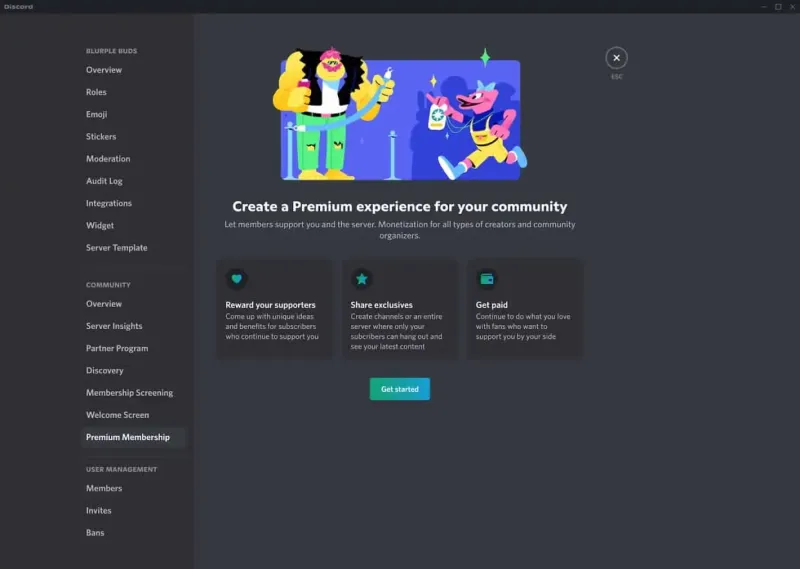
Photo: online fan community Discord creator membership screen, via www.androidheadlines.com
There's a moment that happens in a lot of niche fan communities. Someone starts a Discord server. Maybe it's for a podcast about obscure 90s horror films, or a YouTube channel breaking down competitive fishing tournaments, or a newsletter obsessing over regional fast food chains. The server starts small — a few dozen members swapping memes and recommendations. Then, almost without anyone planning it, someone asks: how do I give this creator money?
That question is quietly rewriting the economics of entertainment in America.
The Old Model Is Losing the Room
For decades, the relationship between fans and entertainment was simple: you watched, you bought merch, and occasionally you sent a letter to a network begging them not to cancel your favorite show. The money flowed one direction — upward, toward studios, networks, and distributors who treated audiences as demographic data points rather than people.
That model still exists, obviously. Disney isn't going anywhere. But something genuinely different is happening at the edges of the entertainment world, and it's starting to pull serious dollars away from the center.
Platforms like Patreon, Substack, and Ko-fi have made it remarkably easy for creators to monetize direct relationships with fans. Discord has given those relationships a physical (well, digital) home. And the audiences showing up? They're not casual viewers. They're the kind of fans who will set a calendar reminder for a live stream, who know the creator's dog's name, who feel genuinely invested in whether the person they follow is doing okay.
That emotional investment has real monetary value — and creators are figuring out how to tap it.
The Psychology of Paying Someone You Actually Like
Here's the thing that traditional entertainment companies keep getting wrong: people don't just pay for content. They pay for connection.
When a fan subscribes to a creator's Patreon at the $10-a-month tier, they're not just buying bonus episodes or early access. They're buying membership in something. They're saying, I belong here, and I want this thing to keep existing. That's a fundamentally different transaction than paying for a Netflix subscription, where you're essentially renting access to a massive, impersonal catalog.
Psychologists call this the parasocial relationship — the one-sided emotional bond audiences form with media figures. But in the creator economy, it's becoming decidedly less one-sided. Creators who build niche communities are often genuinely responsive. They remember usernames. They answer DMs. They host Q&As where they actually read the questions. The intimacy is real, even if it's mediated by a screen.
And fans are paying for that intimacy at rates that would shock a lot of network executives.
Real Numbers From Small Worlds
Consider the math. A creator with 50,000 YouTube subscribers might struggle to generate meaningful ad revenue — that's a relatively modest audience by platform standards. But if even 2% of those subscribers become Patreon members at an average of $8 a month, that's $8,000 in monthly recurring revenue. Predictable. Scalable. Not dependent on algorithm changes or brand deals falling through.
Creators who've built tight communities around genuinely niche interests — tabletop RPG actual-play shows, deep-cut music theory content, hyperlocal true crime — are regularly clearing six figures annually. Some are doing significantly better than that. A handful of Patreon creators in the US have crossed the million-dollar annual mark, almost entirely by serving audiences that major studios would consider too small to bother with.
The key isn't scale. It's density of loyalty.
Discord Is the New Fan Club (But Way More Powerful)
If Patreon is where the money flows, Discord is where the community actually lives. And for niche creators, Discord has become something that entertainment companies genuinely don't know how to replicate.
A well-run Discord server for a niche creator functions like a neighborhood. There are regulars. There are inside jokes. There are people who've been around since the early days and newer members who get welcomed and oriented by the community itself. The creator might pop in a few times a week, but the community sustains itself between appearances.
That self-sustaining quality is enormously valuable. It means fans are engaging with the creator's world even when the creator isn't actively producing content. It deepens attachment. It makes cancellation — the thing that haunts traditional TV fans — almost irrelevant, because the community itself has become the product.
Some creators have started charging for Discord access directly, either through Patreon tiers or standalone memberships. Others keep the server free but use it as a funnel toward paid offerings. Either way, the platform has become central to how niche fan economies actually function.
Why Studios Are Scrambling
Here's where it gets interesting for the broader entertainment industry. The major players — your Disneys, your Warners, your Netflixes — are watching this happen and trying to figure out how to compete with it.
The problem is structural. A studio can't replicate genuine intimacy at scale. They can launch Discord servers (and several have), but fans know the difference between a community managed by a social media intern and one run by the creator they actually care about. They can launch Patreon-style membership programs, but the proposition is weaker — you're paying for access to a corporation, not a person.
Some studios have tried to solve this by partnering with or acquiring niche creators, essentially buying the loyalty that comes with them. Results have been mixed. The intimacy tends to erode when a creator's independence becomes visibly compromised.
The smarter play, which some entertainment companies are starting to figure out, is to treat their own IP as a platform for community rather than just content. But that requires a genuine shift in how they think about audiences — from passive consumers to active participants — and that's a harder cultural change than it sounds.
What This Means for the Rest of Us
If you're a fan of anything niche — and if you're reading NichePulse, there's a solid chance you are — this shift is genuinely good news. It means the things you love don't need mass appeal to survive. It means creators who serve your specific obsession have real paths to sustainability that don't require selling out to a network or chasing algorithmic trends.
It also means you have more power than you probably realize. The fan communities that thrive are the ones where members show up, contribute, and yes, sometimes spend a few bucks a month to keep the lights on. That's not charity — it's investment in something you actually want to exist.
The parasocial relationship isn't new. But the payoff? That part is just getting started.