Weird on Purpose: How 'Unmarketable' TV Became the Hottest Bet in Hollywood
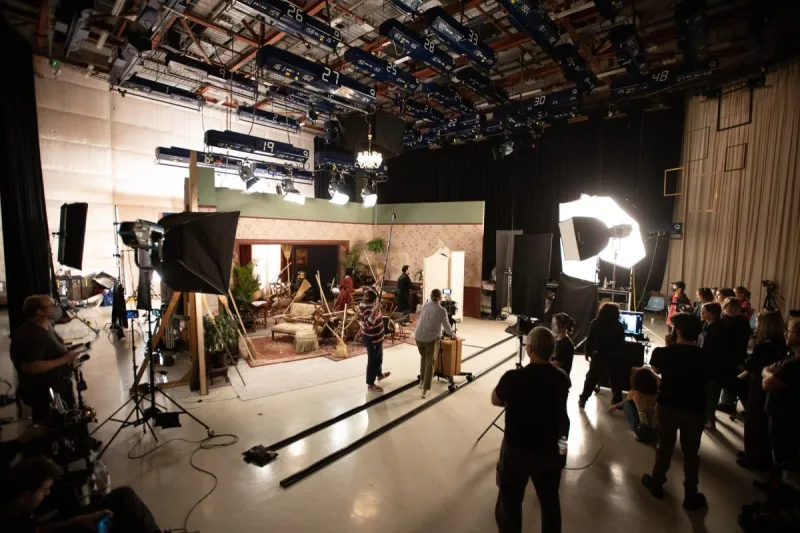
Photo: quirky independent TV show production set creative filming, via www.screenhub.com.au
Not long ago, a show about a mortician who moonlights as a folk singer solving murders in a small Wyoming town would have gotten exactly as far as the first pitch meeting before someone said the words too niche and moved on. A limited series told entirely from the perspective of an unreliable narrator with a diagnosable personality disorder? Pass. An animated comedy where the central joke requires familiarity with mid-century French philosophy? Absolutely not.
Now? Those are the shows getting greenlit. And the executives backing them are doing it on purpose.
The Lowest Common Denominator Problem
For most of television's history, the business logic was straightforward: bigger audiences meant more ad dollars, so you made shows as broadly appealing as possible. The goal was to offend no one, confuse no one, and challenge no one. You cast recognizable faces, hit familiar story beats, and hoped your procedural or sitcom could hold an audience from week to week without demanding too much of them.
It worked, for a while. But the streaming era cracked that logic wide open.
When Netflix, Hulu, HBO Max, and their competitors started competing for subscribers rather than advertisers, the metric that mattered shifted. It wasn't about total viewers anymore — it was about which viewers, and whether they'd stick around. And what the data kept showing, quietly and then very loudly, was that niche audiences are dramatically more loyal than general ones.
A show with 800,000 obsessive fans who rewatch it, recommend it aggressively, and build online communities around it is worth more to a streaming platform than a show with 4 million casual viewers who forget about it by Tuesday. The obsessives renew their subscriptions. The casuals drift.
When Cult Stopped Being a Consolation Prize
The term cult classic used to be what you called a show that failed commercially but found an audience anyway. It was a polite way of saying: this didn't work, but at least some people loved it.
That definition is becoming obsolete.
Studios and platforms are now actively engineering for cult status — building shows with deliberate idiosyncrasies, dedicated but non-mass audiences, and the kind of specific aesthetic identity that makes fans feel like they've discovered something rather than been marketed to. The goal isn't a show everyone tolerates. It's a show a specific group of people absolutely cannot shut up about.
This is a genuine reversal of decades of mainstream entertainment strategy, and it's happening fast.
The Streaming Platform Differentiation Problem
Here's the business reality driving all of this: there are now so many streaming services that simply having a large library isn't enough to distinguish yourself. Every major platform has thousands of hours of content. What they don't all have is identity.
When you think of HBO, you think of a certain quality and prestige. When you think of A24 (which has been moving into TV), you think of a particular aesthetic sensibility — art-forward, slightly unsettling, not for everyone. Those identities are enormously valuable because they give subscribers a reason to stay that goes beyond any individual show.
Niche, deliberately weird content is one of the most efficient ways to build that kind of identity. A show that's genuinely strange and specific signals to a certain audience: this platform gets you. And the audience that receives that signal tends to be disproportionately vocal, influential, and sticky.
Showrunners who've navigated this shift describe a notably different conversation with network and streaming executives than they might have had five or ten years ago. The question used to be how do we make this more accessible? Now it's increasingly how do we make this more yours? — meaning, how do you deepen the specificity rather than sand it down.
What the Retention Data Actually Shows
Platform retention data — most of which streaming services guard carefully — consistently tells the same story: audiences who find a show through word-of-mouth recommendation from within a niche community complete it at dramatically higher rates than audiences reached through broad advertising.
Completion rates matter enormously to streaming algorithms and renewal decisions. A show that 60% of viewers finish is treated very differently than one that 90% of a smaller audience watches start to finish. The latter signals genuine audience investment, which is what platforms are actually trying to measure.
Niche shows tend to punch above their weight on this metric. The audience self-selects — if you're watching a dense, reference-heavy comedy about competitive orchid cultivation, you probably knew what you were signing up for. You're not going to bail after twenty minutes because it's not what you expected.
The Risk That Isn't Really a Risk Anymore
There's still a version of this conversation where greenlighting deliberately weird content sounds like a gamble. And sure, not every niche show becomes What We Do in the Shadows or The Bear or Abbott Elementary — series that started with specific, unusual premises and found audiences that stretched well beyond their initial niche.
But the calculus has changed. The floor for a failed niche show is higher than it used to be, because even a show that doesn't break out can still generate the kind of devoted community engagement that keeps subscribers paying. And the ceiling — the possibility of a genuine cultural phenomenon that emerges from a specific audience and spreads outward — is something no amount of focus-grouping a mainstream premise can reliably produce.
The shows that dominate cultural conversation right now almost never start as safe bets. They start as someone's weird idea that a room full of executives decided to trust.
The Audience Knows the Difference
There's one more factor that doesn't show up in the retention data but matters just as much: audiences can tell when they're being pandered to.
A show made by people who genuinely love a weird, specific thing has a texture that's different from a show engineered to seem weird while actually being safe. Fans of niche content are often sophisticated consumers who've spent years seeking out material that most of the industry ignored. They're not easily fooled by aesthetic weirdness that doesn't run all the way through.
The shows that are actually working in this new environment are the ones where the strangeness is structural — where the premise, the writing, the casting, and the visual language are all committed to the same unusual vision. That kind of coherence can't be faked, and when audiences find it, they hold on tight.
For the first time in a long time, Hollywood is learning to let them.