Why Everything in Your Favorite Underground Scene Keeps Getting Pricier (And Nobody Wants to Admit It)
There's a specific kind of financial denial that lives inside niche communities. It's the mental gymnastics a person does when they drop $65 on a limited-run cassette tape, or $220 on a weekend pass to a festival headlined by artists most of their coworkers have never heard of. They'll tell you it's worth it. They'll tell you it's different. And honestly? They're not entirely wrong — but they're also not entirely right.
Call it the niche tax. It's the invisible premium that gets baked into everything underground, everything small-batch, everything curated for a devoted few rather than the consuming masses. And it's been quietly going up every single year.
The Math Nobody's Running
Here's the thing about mainstream entertainment: when ticket prices go up, people notice. There are news cycles about it. Fans tweet angrily. Occasionally a congressional rep makes noise. The market is big enough that price hikes become public events.
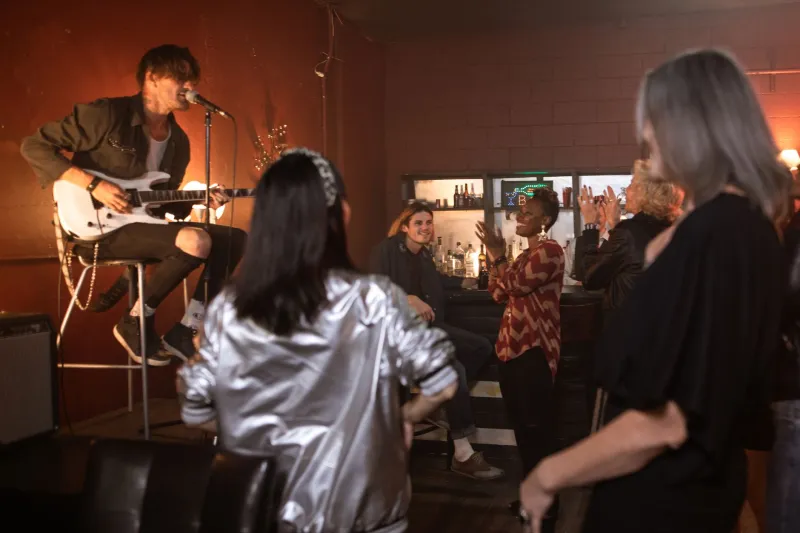
Niche scenes don't get that luxury. When a beloved DIY venue in a mid-size city like Omaha or Richmond bumps its door prices from $15 to $28, there's no headline. There's no backlash campaign. There's just a slightly heavier feeling in your chest as you tap your card at the door and remind yourself that this is a community, not a transaction.
But zoom out and the numbers tell a story. Independent venue operators have been dealing with rising rent, staffing shortages, and insurance cost spikes that have accelerated dramatically since 2021. A 300-capacity room that could once book a touring act for $800 flat is now fielding guarantees of $2,500 or more for artists with comparable draw. That cost gets passed somewhere. Spoiler: it gets passed to you.
Scarcity Isn't Just a Vibe — It's a Pricing Mechanism
Here's where the niche tax gets genuinely interesting, and a little uncomfortable to talk about. In mainstream entertainment, scarcity is usually manufactured — think Taylor Swift's Eras Tour presale chaos, or Supreme drop culture. It's engineered to feel rare.
In underground scenes, scarcity is often just... real. The venue genuinely holds 250 people. The pressing genuinely is limited to 300 copies. The artist genuinely doesn't want to scale up because scaling up would change what they're making. That authenticity is the whole point.
But here's the catch: real scarcity functions the same way manufactured scarcity does when it comes to pricing power. When demand outpaces supply — even in a community of a few thousand people — prices go up. They have to. And because the scarcity feels legitimate, fans are far more willing to absorb it without complaint.
A $180 ticket to a 250-cap show by an artist you've followed for eight years doesn't feel like getting gouged. It feels like a privilege. That psychological reframe is doing a lot of heavy lifting in underground economies.
Merch Markups and the Boutique Premium
Let's talk about merchandise, because this is where the niche tax becomes almost comically visible once you start looking for it.
A standard band tee from a mainstream act on a stadium tour might run you $45 at the venue. Steep, sure, but you expect it. Meanwhile, an artist with 12,000 monthly Spotify listeners selling a hand-screened tee in a run of 75 will price it at $55 to $70 without blinking — and sell out in 20 minutes.
The justification is real: smaller runs mean higher per-unit production costs, hand-finishing takes labor, and the artist is probably fulfilling orders out of their apartment. None of that is fake. But it also means that buying into niche culture at the merch level costs more per item, not less, than buying into mainstream culture. The boutique premium is structural, not incidental.
This extends into physical media, too. Vinyl records pressed in runs of 500 or fewer can carry price tags of $35 to $50 for a standard LP, compared to $25 to $30 for a major-label release with a pressing of 50,000. Zines, art books, limited-edition prints — all of it carries a scarcity markup that dedicated fans absorb as a matter of course.
Why Fans Rationalize It (And Why That Rationalization Is Partly Correct)
Ask a committed member of any niche community whether they feel overcharged, and you'll almost always get a version of the same answer: I know where my money is going. There's a genuine sense of direct impact that mainstream spending doesn't offer. When you buy a $60 record from a small label out of Chicago, you can trace that money to a real person's ability to keep making music. That's not nothing.
And there's the exclusivity factor — not in a snobbish way, but in a real, experiential sense. Being in a 200-person room for a performance that will never be streamed, never be recorded, never be replicated, is a different product than a Netflix special. You're paying for irreproducibility, and on some level, that premium is fair.
But the rationalization also has a ceiling, and communities are starting to hit it. Younger fans entering scenes that older members helped build are facing entry costs that can feel genuinely prohibitive. A 22-year-old trying to get into an underground electronic music scene in a city like Los Angeles or Chicago is navigating ticket prices, membership fees for online communities, and gear costs that didn't exist at the same level five years ago.
The Slow Squeeze Nobody Talks About
What makes the niche tax particularly tricky is that it's not a villain's story. Nobody is twirling a mustache and jacking up prices to squeeze superfans. The forces driving cost increases — real estate, labor, supply chain, inflation — are the same forces affecting every industry. They just hit differently in small ecosystems with no margin for error and no pricing power against the broader economy.
The result is a slow squeeze that communities absorb incrementally, year over year, until someone does the math and realizes that participating in their favorite underground scene now costs roughly what a mid-tier streaming package and a couple of mainstream concerts used to.
The scene isn't selling out. It's just getting more expensive to exist. And for better or worse, the most devoted fans will keep paying — because for them, the alternative isn't finding a cheaper version of the thing they love. The alternative is losing it entirely.
That's the niche tax in its purest form. And it doesn't come with a receipt.