If You Can Google It, Gen Z Doesn't Want It: The Status Game of Impossible-to-Find Entertainment

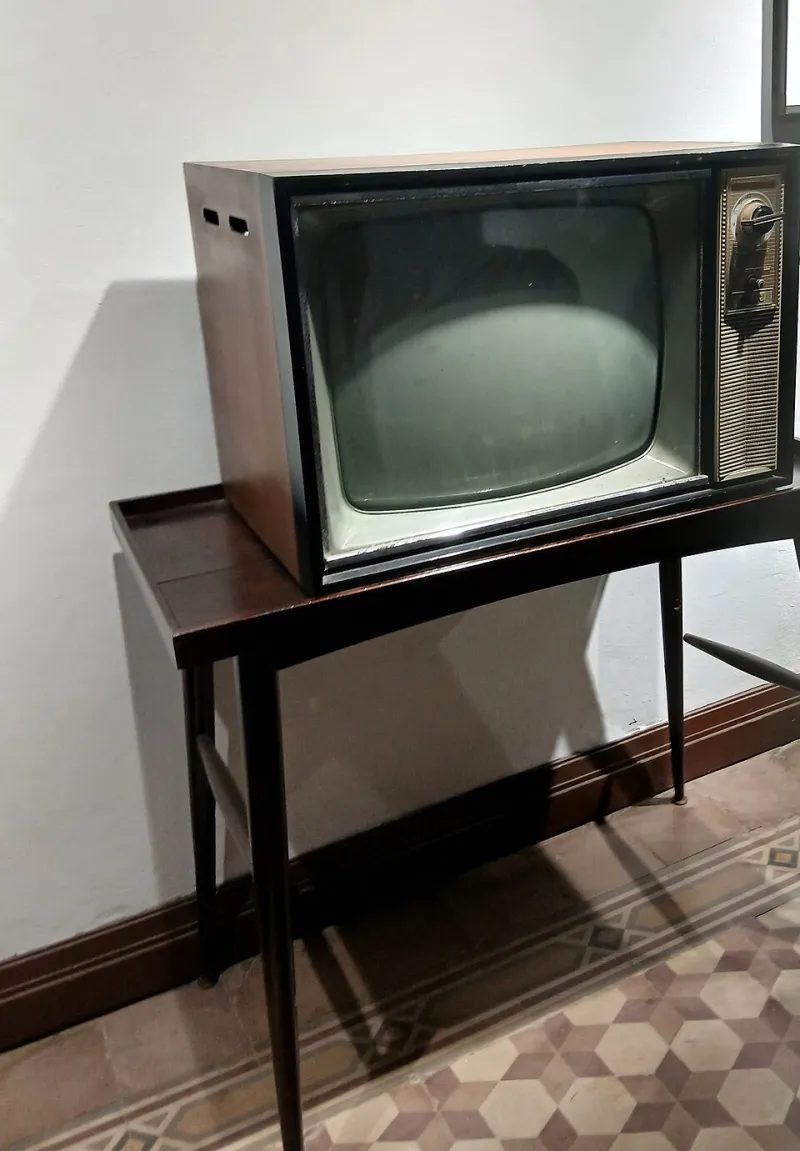
Photo: Matsujima, CC BY-SA 4.0, via Wikimedia Commons
Imagine you're at a party and someone mentions a podcast. You pull out your phone, search for it on Spotify, and come up empty. You try Apple Podcasts. Nothing. You try a direct Google search and find exactly one Reddit thread referencing it, from eight months ago, with no links.
For a lot of people, that's a dead end. For a certain type of Gen Z listener, that's basically a five-star review.
The Oversaturation Problem Nobody Wants to Solve
Let's be honest about the landscape first. There are over 200 streaming services operating in the US right now. Spotify hosts more than 100 million tracks. YouTube uploads roughly 500 hours of video every single minute. TikTok's recommendation engine is so aggressive it can make a complete stranger feel like your best friend within 48 hours.
Everything is everywhere, all the time, and it's been that way long enough that a generation has grown up never knowing anything different.
The predictable response to infinite content is numbness. But there's a less predictable response happening in parallel: active rejection. A growing number of young audiences aren't just tuning out the noise — they're specifically seeking out entertainment that the noise can't reach.
And the savvier creators have noticed.
Making Yourself Hard to Find, On Purpose
The mechanics of intentional obscurity vary, but the playbook has some consistent moves.
Some creators release content exclusively through closed Discord servers or invite-only newsletters, with no public-facing presence at all. Others drop work on platforms with minimal search infrastructure — private Vimeo links shared only within communities, audio files hosted on personal websites with no SEO optimization, zines distributed physically at specific events and nowhere else.
A few have gone further, deliberately scrubbing their work from major platforms after initial release, making the only surviving copies ones that fans saved themselves. One indie musician in the Pacific Northwest gained significant underground traction last year partly because her early EP was only ever available for 72 hours before she pulled it. The people who got it, kept it. The people who didn't spent months trying to find someone who had.
That scarcity wasn't accidental. Neither is most of this.
Exclusivity as Authenticity Proof
To understand why this works, you have to understand how Gen Z reads accessibility.
For older millennials, discoverability was aspirational — if your favorite band blew up, that was validation. It meant you had good taste and the world was finally catching on. The mainstream catching up felt like a win.
For a significant portion of Gen Z, that same trajectory reads as contamination. If everyone has access to something, it stops being theirs. And in a cultural moment where authenticity is the most valuable currency going, anything that feels manufactured for mass consumption is immediately suspect.
This is where gatekeeping — historically a dirty word in fandom spaces — gets rehabilitated. When a creator makes their work hard to find, it functions as a signal: this wasn't made to go viral. This was made for specific people. The friction of discovery becomes evidence of integrity.
The fans who clear that friction feel it. Finding something difficult to access and succeeding carries genuine social weight. You didn't stumble on it through an algorithm. You earned it.
The Invite Economy
Nothing captures this shift quite like the rise of invite-based community structures around entertainment.
Substacks with waitlists. Discord servers that only grow through member referrals. Fan communities that require some kind of demonstrated investment — a certain number of posts, completion of a quiz about the creator's work, a paid membership — before you get access to the good stuff.
The structure mirrors what exclusive dining or private clubs do in the physical world. The barrier to entry isn't really about keeping people out — it's about signaling to the people inside that they're somewhere worth being.
What's interesting is how this flips the traditional creator incentive structure. The standard advice for anyone building an audience online has always been to reduce friction, maximize accessibility, and let the algorithm do the distribution work. The intentional obscurity trend says the opposite: add friction deliberately, and watch how it changes who shows up and how much they care.
Not Everyone Buys It
It's worth being real about the tension here, because not everyone in these spaces thinks manufactured scarcity is the flex it's presented as.
There's a legitimate critique that deliberate gatekeeping can shade into elitism pretty fast — that creators who make their work artificially hard to access are often just creating barriers that filter out people without the time, money, or existing social connections to clear them. The kid working two jobs doesn't have the bandwidth to hunt down an obscure invite link. The person who didn't grow up with the right cultural references won't know where to even start looking.
Some creators in this space are genuinely thoughtful about this tension. Others are less so. The line between 'authentic scarcity' and 'manufactured exclusivity for clout' is blurrier than most discourse admits.
Where This Trend Actually Goes
The irony baked into all of this is that the moment intentional obscurity becomes a widely discussed strategy, it starts to lose its power. Once everyone knows the trick, it stops working as an authenticity signal.
We're probably already in the middle of that transition. Think pieces about 'hard to find' content are circulating. Brands are trying to replicate the aesthetic. Mainstream creators are experimenting with limited drops and invite-only releases.
Which means the genuinely obscure stuff will have to get even more obscure. The real thing will keep moving to stay ahead of the imitation.
For the dedicated communities that have always operated off the beaten path — the ones NichePulse was built to serve — none of this is new. They've been living in the specific, the hard-to-find, the deliberately small for years.
The only difference is that the mainstream is finally looking over its shoulder and noticing what it's been missing.