Underground by Design: How Niche Fan Communities Are Outsmarting the Algorithm
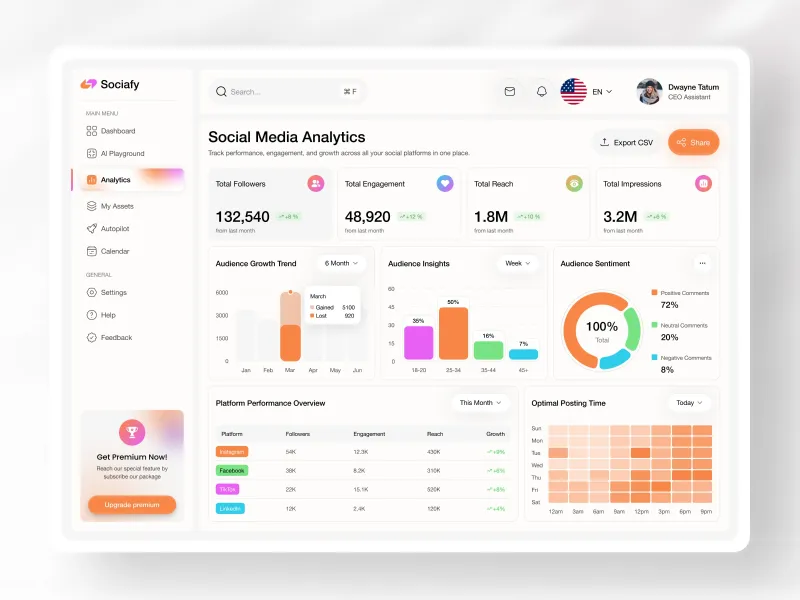
Photo: person on phone social media analytics dashboard niche community, via files.muzli.cloud
Somewhere between a Discord server and a very specific TikTok hashtag, a small but devoted group of fans is doing something the platforms never anticipated: playing the game better than the people who built it.
They're not influencers with PR teams. They're not backed by studio money. They're just really, really committed — and increasingly, they're winning.
The Problem With Being Niche
Here's the thing about loving something obscure: the algorithm doesn't care about you. TikTok's For You Page is optimized for velocity — content that catches fire fast gets pushed further. YouTube's recommendation engine rewards watch time and clicks. Neither system is particularly kind to the creator making deep-dive videos about 1970s Yugoslav cinema or the musician blending Appalachian folk with hyperpop.
For years, niche creators just kind of accepted this reality. You made your thing, your 400 dedicated fans loved it, and you stayed invisible to everyone else. But somewhere around 2022, something shifted. Communities started getting strategic.
"We realized the algorithm isn't a wall — it's more like a puzzle," says Mara, a 26-year-old fan account operator who helps run an online community dedicated to obscure competitive card games. "Once you understand what it's actually measuring, you can work with it instead of just hoping."
The Coordinated Engagement Playbook
The tactics being used aren't exactly a secret anymore, but they're sophisticated enough that platforms keep scrambling to adjust. Here's what's actually happening:
Engagement windows. Fan communities will coordinate to watch, comment, and share a video within the first 30 to 60 minutes of upload. This artificial spike tricks recommendation systems into thinking the content has breakout potential, which triggers wider distribution before the algorithm can recalibrate.
Hashtag layering. Instead of using one hyper-specific tag that no one's searching, savvy communities combine ultra-niche hashtags with mid-tier trending ones. The niche tag finds the core audience; the broader tag catches curious outsiders. It's a funnel built by hand.
Comment seeding. Strategic comments that include searchable keywords — not spam, but genuine engagement phrased to be discoverable — help surface content in search results that the video title alone might not capture.
"It sounds like a lot of work because it is," laughs Devon, a content creator in the competitive fishing video space who's grown his channel to 80,000 subscribers largely through community coordination. "But when you love something this much, it doesn't really feel like labor."
The Cat-and-Mouse With Platforms
TikTok and YouTube aren't oblivious. Both platforms have updated their systems multiple times to detect what they call "inauthentic engagement" — coordinated behavior that artificially inflates metrics. The challenge is that what niche communities are doing isn't fake. It's real people, genuinely engaged, just organized.
That distinction matters legally and ethically. No bots. No paid clicks. Just fans acting like fans — but on a schedule.
Platforms have responded by deprioritizing content that shows sudden, unexplained engagement spikes from small account clusters. They've also gotten better at identifying when comment patterns look templated. But every time they patch one approach, communities adapt.
"It's honestly kind of thrilling," admits Yolanda, a moderator for a subreddit dedicated to vintage anime that's also active on TikTok. "They update something, we figure out the new rules, we adjust. It keeps the community active and invested."
What This Means for Creators
For the creators on the receiving end of this organized love, the experience is equal parts humbling and surreal. Many didn't ask for a street team — they just started making content about something they cared about, and the community materialized.
Take the case of a creator known online as PatchworkPete, who makes long-form videos about restoring vintage American pinball machines. Two years ago, his channel sat at around 3,000 subscribers. After a dedicated Discord community adopted him as their unofficial cause — coordinating watch parties, sharing his videos across multiple platforms, and flooding comment sections with enthusiastic discussion — he crossed 200,000 subscribers in under a year.
"I didn't know any of this was happening at first," Pete says. "Someone finally told me there was a whole Discord dedicated to getting my videos seen. I cried, honestly. These people cared more about my work than I thought anyone possibly could."
The Ethics Are Complicated
Not everyone is comfortable with the implications. Critics argue that coordinated engagement, even when organic, distorts the information landscape that platforms use to surface content. If niche communities can game recommendations, so can bad actors — and the line between "passionate fans" and "coordinated manipulation" can blur depending on who's doing it.
There's also a question of sustainability. Creators who grow through community coordination can become dependent on that infrastructure. When the community moves on or loses interest, the numbers can collapse just as quickly as they rose.
And for fans themselves, there's an emotional labor cost. Coordinating engagement campaigns takes time, energy, and constant communication. Some community members burn out. Others start to feel like unpaid marketing staff rather than fans.
"I had to step back for a few months," Mara admits. "It started feeling like a job. The passion was still there, but the joy of just being a fan got a little lost."
The Bigger Picture
What's really happening here is a power shift — slow, messy, and incomplete, but real. For most of the platform era, algorithms decided what got seen. Now, organized communities are demonstrating that collective human behavior can rival machine logic, at least in pockets.
For niche entertainment — the weird stuff, the specific stuff, the content that would never get a Netflix budget — that's genuinely transformative. Communities are essentially building their own distribution networks inside platforms that weren't designed for them.
Whether the platforms will eventually accommodate this reality or crack down harder remains to be seen. But right now, in Discord servers and subreddits and group chats across the country, fans are waking up to the fact that the algorithm isn't destiny.
It's just a puzzle. And they've got time to solve it.