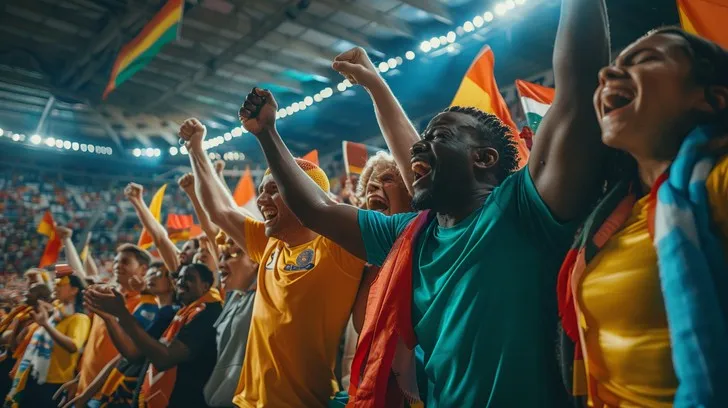
Betting on Your Faves: The Wild New World of Investing in Creators Like They're Stocks

Photo: Аркадий Зарубин, CC BY-SA 3.0, via Wikimedia Commons
For most of history, being a fan meant buying the merch, attending the show, maybe leaving a glowing review online. You gave your time, your attention, your money — and in return, you got the content. That was the deal.
Gen Z, characteristically, has decided that's not enough.
Across the country, a growing cohort of young fans is putting actual money behind the creators they believe in — not just as consumers, but as stakeholders. They want a piece of the upside. They want to say they were there before anyone else. And increasingly, the infrastructure exists to make that happen.
From Superfan to Shareholder
The mechanisms vary, but the impulse is consistent. Equity crowdfunding platforms like Wefunder and StartEngine — originally built for startup investing — have quietly become launchpads for independent creators and entertainment ventures seeking fan capital. Under SEC regulations updated through the JOBS Act, everyday people can invest as little as $100 in a private company, including one built around a creator's brand.
Creators in podcasting, independent film, gaming, and even niche YouTube channels have used these platforms to raise five- and six-figure sums from their own audiences. Fans become literal shareholders, entitled to a cut of future profits if the venture succeeds.
"I put $250 into a podcast I've been listening to for three years," says Tyler, a 23-year-old from Columbus, Ohio. "It wasn't really about making money. I just wanted them to keep making it. But also — yeah, if they blow up, I want to have been part of that."
Creator Coins and the Crypto Angle
Parallel to equity crowdfunding, a more speculative corner of the market emerged through creator coins — digital tokens tied to individual personalities. Platforms like Rally and BitClout (now DeSo) experimented with letting fans buy tokens that theoretically appreciated in value as a creator's popularity grew.
The pitch was intoxicating: imagine buying "stock" in a YouTuber before they hit a million subscribers, then watching your investment multiply as their audience exploded. For a moment, it felt like the future of fandom.
The reality was messier. Creator coin markets were volatile, often illiquid, and deeply susceptible to manipulation. Some creators pumped their own tokens. Others abandoned the platforms, leaving fans holding worthless digital assets. The crypto winter of 2022 wiped out much of the sector, and many of the early platforms either pivoted or shut down entirely.
But the idea didn't die. It just got more cautious.
"People got burned, but they didn't stop wanting this," says Priya, a digital media analyst based in Austin. "The desire to have a financial stake in the creators you love — that's not going away. The infrastructure just needs to catch up."
The Emotional Economics of Fan Investment
What makes this trend genuinely unlike traditional investing is the emotional layer baked into every transaction. When you buy Apple stock, you don't follow Tim Cook's Instagram. You don't feel personally hurt when the quarterly earnings disappoint. The relationship is purely transactional.
Fan investment is anything but.
When you've put money into a creator's future, your parasocial relationship with them shifts. Their success feels like your success. Their failures feel personal — and potentially financial. It's a cocktail of emotional investment and actual investment that can get complicated fast.
Several fans interviewed for this piece described feeling a heightened sense of loyalty after investing — but also a heightened sense of anxiety. One woman, who asked not to be named, invested $500 in an independent filmmaker's equity crowdfunding round and found herself checking the creator's social media obsessively for signs of momentum.
"I cared about her work before I invested," she says. "After, it was like I cared about her whole life. It became a lot."
When It Works: The Success Stories
Not every story ends in stress spirals and lost capital. There are genuine wins.
A horror fiction podcast based in the Pacific Northwest raised over $180,000 from fans through equity crowdfunding in 2023. The funds allowed the creators to hire a full production team, license original music, and expand from a biweekly to a weekly release schedule. Fan-investors have since received quarterly updates and, as the show landed a distribution deal, are in line for a modest return.
"We treated our investors like partners from day one," one of the co-creators explains. "Regular updates, honest communication about challenges. People responded to that. They weren't just fans anymore — they were genuinely rooting for us in a different way."
For fans who got in early on creators who later crossed over into mainstream success, the psychological reward alone can feel worth it. Being able to say "I believed in them before anyone else" — and having a financial record to prove it — carries serious cultural currency in communities where taste and discovery are social status markers.
The Cautionary Side
For every success story, there are quieter tales of disappointment. Creators who raised fan money and then pivoted, went quiet, or simply couldn't deliver on ambitious promises. Unlike traditional investments, fan investment often comes with limited legal recourse and even more limited transparency.
Equity crowdfunding is regulated, but the disclosures required from small creators are far less rigorous than those from established companies. Fans-turned-investors may not fully understand what they're actually buying, what the risks are, or how unlikely a meaningful financial return really is.
Financial advisors are, unsurprisingly, skeptical. "Investing based on emotional connection to a personality is the opposite of sound investing strategy," says one fee-only advisor based in Chicago who asked not to be quoted by name. "The upside scenarios are real but rare. The downside scenarios are common and rarely discussed in these communities."
What It Says About This Generation
Maybe the most interesting thing about parasocial investing isn't the money — it's what it reveals about how Gen Z conceptualizes fandom itself. For a generation that grew up watching creators build empires from bedroom studios, the line between fan and collaborator has always felt blurry. Investing is just the logical extension of that blurriness.
They're not passive audiences. They're participants. They want credit, connection, and yes, occasionally, a check.
Whether the platforms and regulations evolve to support that impulse responsibly — or whether the space stays as wild and uneven as it currently is — will define whether this stays a niche experiment or becomes a genuine shift in how entertainment gets funded.
Either way, the fans who are doing it aren't waiting for permission. They never do.